
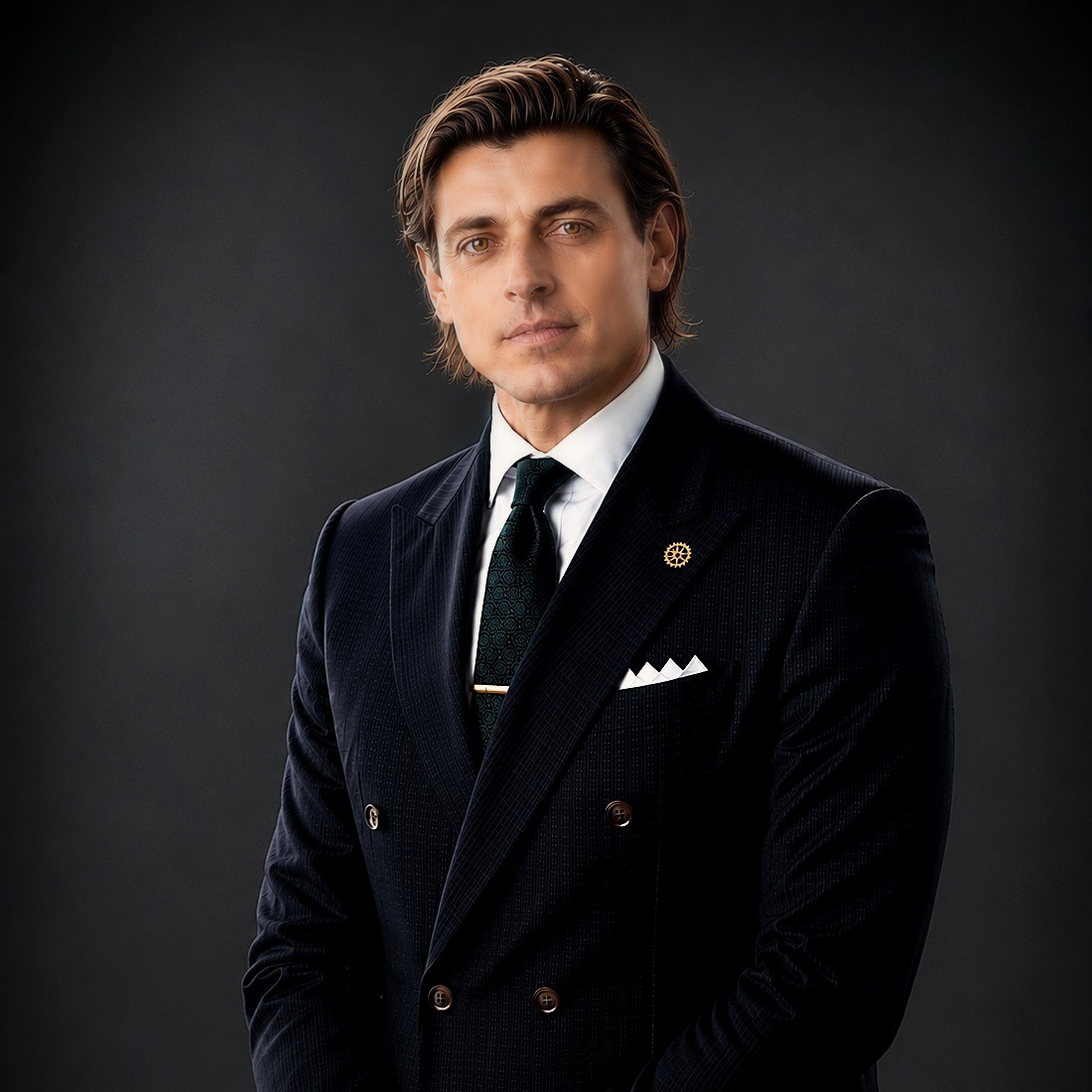
Professional arc: from engineering roots to the capital interface
The path to operating at the intersection of institutional capital and real-asset industry does not begin in finance — it begins in engineering. I built my analytical capacity and risk-management instinct across complex industrial programmes, where a flawed assessment is measured in millions of euros and years of delay. I have not left that discipline behind: I have translated it into the language of capital.
During the Saipem years (2019-2023) I operated as Appointed Area Manager, PMO & Operations Management on capital-intensive energy programmes across Europe and the Middle East. I learned what it means to govern a programme when counterparts carry profoundly different risk cultures and time horizons — and I learned that the breaking point is rarely technical: it is always a problem of misalignment between those who decide, those who execute, and those who deployed the capital.
From that foundation grew the current work: I represent the investment sponsor in a European industrial programme worth approximately €1 billion — 15 circular-economy and energy-transition plants, Luxembourg-based infrastructure fund. I am Founder & CEO of Krymax Studio, Fractional Executive & Board Advisor through YOURgroup, and CEO & Chairman of Infinito Village Environment. Based in Lugano, with global mandates.
Credentials and the ownership-first philosophy
The formal credentials are verifiable: MSc in Mechanical Engineering from Politecnica delle Marche, chartered engineer with the Italian National Council of Engineers, Corporate Governance and General Management certification (2019), AICIM Ambassador. These are not decorations: they are the thread connecting technical competence to governance discipline.
The philosophy is ownership-first: every mandate is approached with the mindset of someone who has their own capital at stake, not of someone optimising a fee. This means delivering uncomfortable assessments when they are warranted, exiting a mandate if misalignment is irrecoverable, and working on a limited number of cases at a time to guarantee genuine oversight — not nominal presence.
The stated path runs from advisor and capital allocator toward a growing role as a long-term investor in scalable industrial platforms. It is not a distant destination: it is the thread that orients every operational choice today.
Why I am the bridge
The gap between institutional capital and real-asset industry is not informational — it is structural. Funds and family offices have the capital but often lack the governance capacity and execution oversight required in capital-intensive sectors. Industrial businesses have operational expertise but rarely speak the language of capital or are structured to engage with it. I operate in the middle: I understand both sides because I have lived both.
The result is a single counterpart who brings to the table an allocator's lens, a board member's discipline and the technical capacity to assess execution — not a consulting firm with a team of analysts, but one figure, accountable, with genuine skin in the game.
FAQ — Profile and mandates
How does an engineering background fit a capital-markets role?
In capital-intensive sectors — infrastructure, energy, circular economy — risk is technical before it is financial. A financial model that ignores the engineering complexity of the underlying programme overestimates returns and underestimates risk. The engineering background is an informational advantage, not a cosmetic element of the profile.
Do you work across languages and markets?
Yes. I operate in Italian and English, with the instinct of someone who has managed cross-border programmes across very different cultural and institutional environments — continental Europe, the Middle East, Anglo-Saxon markets. Lugano is not an arbitrary choice: it is a natural hub between the Swiss capital pool, the Italian market and international investors.